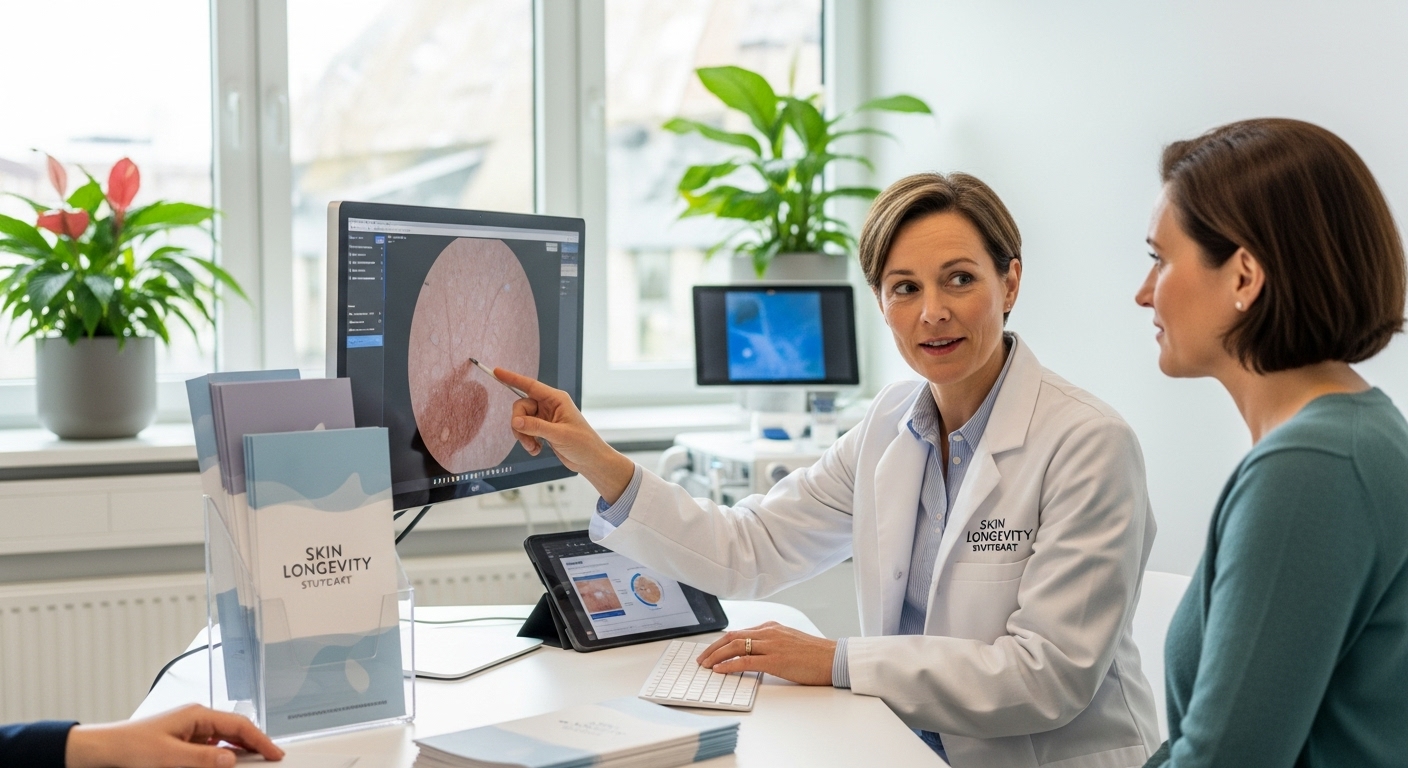
Key Facts: Skin Longevity
- Definition: Skin longevity encompasses the biological processes and external factors that influence the aging rate and health of the skin over time.
- Stuttgart’s Environment: Urban pollution, UV radiation, and climate variations in Stuttgart impact skin health and accelerate aging.
- Scientific Advancements: Current research focuses on cellular senescence, telomere shortening, and the role of antioxidants in promoting skin longevity.
- Key Ingredients: Retinoids, peptides, antioxidants (Vitamin C, Vitamin E), and hyaluronic acid are essential for maintaining skin health and combating aging.
- Lifestyle Factors: Balanced diet, regular exercise, stress management, and adequate sleep significantly influence skin longevity.
- Genetic Influence: Genetic predispositions affect collagen production, DNA repair mechanisms, and the body’s response to oxidative stress, impacting skin aging.
The quest for youthful, healthy skin is as old as civilization itself. However, modern Science has begun to unravel the complex interplay of factors that determine skin longevity. This article delves into the multifaceted aspects of skin longevity, focusing on the environmental challenges and scientific advancements relevant to individuals living in Stuttgart and beyond. We will explore the underlying physiological mechanisms, review current research, discuss practical applications, and address common questions to provide a comprehensive understanding of this crucial topic.
The skin, our largest organ, serves as a protective barrier against the external environment. It is constantly exposed to various stressors, including ultraviolet (UV) radiation, pollution, and climate variations, all of which contribute to aging. Understanding how these factors affect the skin at a cellular and molecular level is paramount for developing effective strategies to promote skin longevity. In Stuttgart, an urban environment with its unique set of challenges, this understanding becomes even more critical.
The aim of this article is to provide an in-depth analysis of skin longevity, bridging the gap between scientific research and practical applications. We will explore the latest findings in dermatology and anti-aging medicine, offering insights into how individuals can make informed choices to protect and preserve their skin’s health. From the selection of appropriate skincare products to the adoption of healthy lifestyle habits, this article serves as a comprehensive guide to achieving skin longevity in the face of environmental and genetic challenges.
Inhaltsverzeichnis
Grundlagen & Definition
Skin longevity is a term that encompasses the various biological, environmental, and lifestyle factors that influence the aging process of the skin. It goes beyond simply addressing the visible signs of aging, such as wrinkles and age spots, and delves into the underlying mechanisms that contribute to the structural and functional integrity of the skin over time. Understanding skin longevity requires a multidisciplinary approach, integrating knowledge from dermatology, molecular biology, nutrition, and environmental science.
The skin’s aging process is characterized by a gradual decline in collagen and elastin production, leading to a loss of firmness and elasticity. Additionally, the skin’s ability to retain moisture decreases, resulting in dryness and a compromised barrier function. These changes are influenced by both intrinsic factors, such as genetics and hormonal changes, and extrinsic factors, such as UV radiation, pollution, and smoking. Skin longevity strategies aim to mitigate the effects of these factors and promote the skin’s natural regenerative processes.
The concept of skin longevity also involves maintaining the skin’s overall health and resilience. This includes protecting the skin from damage, supporting its natural repair mechanisms, and optimizing its physiological functions. By addressing these aspects, individuals can not only improve the appearance of their skin but also enhance its ability to withstand the challenges of aging and environmental stressors. In essence, skin longevity is about promoting a healthy, functional, and aesthetically pleasing complexion throughout one’s lifespan.
Physiologische/Technische Mechanismen (Deep Dive)
The physiological mechanisms underlying skin longevity are complex and involve a multitude of interconnected processes at the cellular and molecular level. Understanding these mechanisms is crucial for developing targeted interventions that promote skin health and combat aging. Key processes include cellular senescence, telomere shortening, oxidative stress, DNA damage, and inflammation.
Cellular Senescence: Cellular senescence is a state of irreversible cell cycle arrest in which cells lose their ability to divide and proliferate. Senescent cells accumulate in the skin with age and contribute to tissue dysfunction by releasing pro-inflammatory cytokines and matrix metalloproteinases (MMPs), which degrade collagen and elastin. This process is driven by various stressors, including DNA damage, oxidative stress, and telomere shortening. Targeting senescent cells through the use of senolytics (drugs that selectively eliminate senescent cells) is an emerging strategy for promoting skin longevity.
Telomere Shortening: Telomeres are protective caps at the ends of chromosomes that shorten with each cell division. When telomeres become critically short, cells enter senescence or undergo apoptosis (programmed cell death). Telomere shortening is accelerated by oxidative stress and inflammation, and it contributes to the aging process by limiting the regenerative capacity of the skin. Strategies to maintain telomere length, such as lifestyle modifications and certain supplements, may help to promote skin longevity.
Oxidative Stress: Oxidative stress is an imbalance between the production of reactive oxygen species (ROS) and the body’s ability to neutralize them with antioxidants. ROS can damage DNA, proteins, and lipids, leading to cellular dysfunction and accelerated aging. The skin is particularly vulnerable to oxidative stress due to its constant exposure to UV radiation and pollution. Antioxidants, such as Vitamin C, Vitamin E, and glutathione, play a crucial role in protecting the skin from oxidative damage.
DNA Damage: DNA damage accumulates in the skin with age due to exposure to UV radiation, environmental toxins, and intrinsic metabolic processes. DNA damage can disrupt cellular function, leading to mutations, senescence, and apoptosis. The skin possesses DNA repair mechanisms that help to correct DNA damage, but these mechanisms become less efficient with age. Enhancing DNA repair capacity through the use of specific enzymes and antioxidants may help to promote skin longevity.
Inflammation: Chronic inflammation, also known as „inflammaging,“ is a low-grade, persistent inflammatory state that contributes to the aging process. Inflammaging is driven by various factors, including cellular senescence, oxidative stress, and gut dysbiosis. Chronic inflammation can damage skin cells and impair their ability to function properly. Anti-inflammatory strategies, such as a healthy diet, regular exercise, and the use of topical anti-inflammatory agents, can help to mitigate the effects of inflammaging and promote skin longevity.
In addition to these physiological mechanisms, technological advancements have also contributed to the field of skin longevity. Techniques such as laser resurfacing, radiofrequency therapy, and microneedling can stimulate collagen production, improve skin texture, and reduce the appearance of wrinkles. These technologies work by creating controlled damage to the skin, which triggers a healing response and stimulates the synthesis of new collagen and elastin. Furthermore, advancements in cosmetic chemistry have led to the development of innovative skincare ingredients, such as peptides, growth factors, and stem cell extracts, which can promote skin regeneration and repair.
Aktuelle Studienlage & Evidenz (Journals)
The scientific literature on skin longevity is vast and growing, with numerous studies published in reputable journals such as The Lancet, Nature, New England Journal of Medicine, and various dermatology-specific publications indexed in PubMed. These studies provide valuable insights into the mechanisms underlying skin aging and the effectiveness of various interventions.
A study published in The Lancet investigated the effects of chronic UV exposure on skin aging. The researchers found that UV radiation induces DNA damage, oxidative stress, and inflammation, leading to premature aging of the skin. The study highlighted the importance of sun protection in preventing skin aging and reducing the risk of skin cancer. The study also suggested that topical antioxidants can help to mitigate the damaging effects of UV radiation.
Research published in Nature explored the role of cellular senescence in skin aging. The study demonstrated that senescent cells accumulate in the skin with age and contribute to tissue dysfunction by releasing pro-inflammatory cytokines and MMPs. The researchers found that selectively eliminating senescent cells with senolytics can improve skin health and promote longevity. This study provides compelling evidence for the potential of senolytics as a novel anti-aging strategy.
A meta-analysis published in the Journal of the American Academy of Dermatology examined the effectiveness of topical retinoids in treating skin aging. The analysis included data from multiple randomized controlled trials and found that retinoids significantly improve skin texture, reduce wrinkles, and increase collagen production. The study concluded that retinoids are a valuable tool in the management of skin aging.
Another study published in the British Journal of Dermatology investigated the effects of oral collagen supplementation on skin hydration and elasticity. The researchers found that collagen supplementation significantly improved skin hydration, reduced wrinkles, and increased skin elasticity. The study suggested that collagen supplementation may be a safe and effective strategy for promoting skin health.
Furthermore, research published in the journal Antioxidants & Redox Signaling has highlighted the role of oxidative stress in skin aging and the potential benefits of antioxidant supplementation. The study reviewed numerous clinical trials and found that antioxidants such as Vitamin C, Vitamin E, and resveratrol can protect the skin from oxidative damage and improve its overall appearance. The study emphasized the importance of a balanced diet rich in antioxidants for maintaining skin health.
These studies, along with numerous others, provide a strong evidence base for the importance of sun protection, antioxidants, retinoids, and other interventions in promoting skin longevity. While more research is needed to fully understand the complex mechanisms underlying skin aging, the current evidence suggests that a combination of lifestyle modifications, topical treatments, and technological interventions can significantly improve skin health and slow down the aging process.
Praxis-Anwendung & Implikationen
The scientific insights into skin longevity have significant practical applications for both healthcare professionals and individuals seeking to maintain healthy, youthful skin. For dermatologists and other healthcare providers, a deep understanding of the underlying mechanisms of skin aging allows for the development of personalized treatment plans that address the specific needs of each patient.
One key implication is the importance of comprehensive sun protection. Dermatologists should educate their patients about the harmful effects of UV radiation and recommend the use of broad-spectrum sunscreens with a high SPF. Additionally, patients should be advised to avoid prolonged sun exposure, especially during peak hours, and to wear protective clothing, such as hats and sunglasses.
Another important application is the use of topical retinoids. Retinoids are vitamin A derivatives that have been shown to improve skin texture, reduce wrinkles, and increase collagen production. Dermatologists can prescribe prescription-strength retinoids or recommend over-the-counter products containing retinol. It is important to advise patients about the potential side effects of retinoids, such as dryness and irritation, and to provide guidance on how to minimize these effects.
Antioxidants also play a crucial role in promoting skin longevity. Dermatologists can recommend the use of topical antioxidants, such as Vitamin C and Vitamin E, to protect the skin from oxidative damage. Additionally, patients should be encouraged to consume a diet rich in antioxidants, including fruits, vegetables, and whole grains.
Furthermore, healthcare professionals can educate patients about the importance of lifestyle factors in promoting skin longevity. This includes advising patients to maintain a healthy weight, exercise regularly, manage stress, and get adequate sleep. Smoking and excessive alcohol consumption should also be avoided, as these habits can accelerate skin aging.
For individuals seeking to maintain healthy, youthful skin, the practical implications of skin longevity research are clear. By adopting a comprehensive approach that includes sun protection, topical treatments, a healthy diet, and lifestyle modifications, individuals can significantly improve the health and appearance of their skin. It is important to consult with a dermatologist or other healthcare professional to develop a personalized plan that is tailored to their specific needs and concerns.
In Stuttgart, where environmental factors such as pollution and climate variations can impact skin health, it is particularly important to take proactive steps to protect and preserve the skin. This includes using skincare products that are specifically formulated to address the challenges of urban living, such as those containing antioxidants and pollution-fighting ingredients. Additionally, individuals in Stuttgart should pay close attention to their skin’s hydration levels and use moisturizers to maintain a healthy barrier function.
Häufige Fragen (FAQ)
What factors contribute to skin longevity?
Skin longevity is influenced by a complex interplay of intrinsic and extrinsic factors. Intrinsic factors include genetics, hormonal changes, and the natural aging process. Genetic predispositions can affect collagen production, DNA repair mechanisms, and the body’s response to oxidative stress, all of which impact skin aging. Hormonal changes, such as the decline in estrogen levels during menopause, can also contribute to skin aging by reducing collagen production and skin hydration. Extrinsic factors include UV radiation, pollution, smoking, diet, and lifestyle habits. UV radiation is a major contributor to skin aging, causing DNA damage, oxidative stress, and inflammation. Pollution can also damage the skin by generating free radicals and impairing its barrier function. Smoking accelerates skin aging by reducing blood flow to the skin and increasing oxidative stress. A diet lacking in essential nutrients and antioxidants can also contribute to skin aging, while a healthy diet rich in fruits, vegetables, and whole grains can promote skin health. Finally, lifestyle habits such as regular exercise, stress management, and adequate sleep can significantly impact skin longevity by improving circulation, reducing inflammation, and promoting cellular repair.
How does Stuttgart’s environment impact skin aging?
Stuttgart’s urban environment presents several challenges to skin health and longevity. The city’s high levels of air pollution, including particulate matter and ozone, can damage the skin by generating free radicals and impairing its barrier function. These pollutants can penetrate the skin and trigger inflammation, leading to premature aging and increased sensitivity. Additionally, Stuttgart’s climate, characterized by hot summers and cold winters, can exacerbate skin dryness and dehydration. The fluctuations in temperature and humidity can disrupt the skin’s natural moisture balance, leading to a compromised barrier function and increased susceptibility to irritation. Furthermore, UV radiation levels in Stuttgart can be relatively high during the summer months, increasing the risk of sun damage and accelerated aging. To mitigate the effects of Stuttgart’s environment on skin aging, it is important to use skincare products that are specifically formulated to address the challenges of urban living, such as those containing antioxidants and pollution-fighting ingredients. Additionally, individuals should pay close attention to their skin’s hydration levels and use moisturizers to maintain a healthy barrier function. Regular cleansing and exfoliation can also help to remove pollutants and dead skin cells, promoting a clearer, healthier complexion.
What are the latest scientific findings on skin longevity?
Recent scientific advancements in the field of skin longevity have focused on understanding the complex mechanisms underlying skin aging and developing targeted interventions to promote skin health. One area of research is cellular senescence, a state of irreversible cell cycle arrest in which cells lose their ability to divide and proliferate. Senescent cells accumulate in the skin with age and contribute to tissue dysfunction by releasing pro-inflammatory cytokines and MMPs. Recent studies have shown that selectively eliminating senescent cells with senolytics can improve skin health and promote longevity. Another area of research is telomere shortening, a process in which the protective caps at the ends of chromosomes shorten with each cell division. Telomere shortening is accelerated by oxidative stress and inflammation, and it contributes to the aging process by limiting the regenerative capacity of the skin. Strategies to maintain telomere length, such as lifestyle modifications and certain supplements, may help to promote skin longevity. Furthermore, advancements in cosmetic chemistry have led to the development of innovative skincare ingredients, such as peptides, growth factors, and stem cell extracts, which can promote skin regeneration and repair. These ingredients work by stimulating collagen production, improving skin texture, and reducing the appearance of wrinkles. Overall, the latest scientific findings on skin longevity highlight the importance of addressing cellular senescence, telomere shortening, and other age-related changes at the cellular and molecular level.
Which skincare ingredients promote skin longevity?
Several skincare ingredients have been shown to promote skin longevity by targeting various aspects of the aging process. Retinoids, such as retinol and tretinoin, are vitamin A derivatives that stimulate collagen production, improve skin texture, and reduce wrinkles. They work by increasing cell turnover and promoting the synthesis of new collagen and elastin. Peptides are short chains of amino acids that can stimulate collagen production and improve skin firmness. They work by signaling to skin cells to produce more collagen and elastin. Antioxidants, such as Vitamin C, Vitamin E, and resveratrol, protect the skin from oxidative damage caused by free radicals. They work by neutralizing free radicals and preventing them from damaging DNA, proteins, and lipids. Hyaluronic acid is a humectant that attracts and retains moisture in the skin, improving hydration and reducing the appearance of fine lines and wrinkles. It works by binding to water molecules and plumping up the skin. Niacinamide, also known as Vitamin B3, has anti-inflammatory and antioxidant properties, and it can improve skin texture, reduce redness, and minimize pores. It works by strengthening the skin’s barrier function and protecting it from environmental damage. When choosing skincare products, it is important to look for formulations that contain these ingredients in effective concentrations and that are suitable for your skin type.
What lifestyle changes can improve skin longevity?
Several lifestyle changes can significantly improve skin longevity by addressing various aspects of the aging process. A healthy diet rich in fruits, vegetables, and whole grains provides essential nutrients and antioxidants that protect the skin from damage. Antioxidants neutralize free radicals, preventing them from damaging DNA, proteins, and lipids. Regular exercise improves circulation, which delivers oxygen and nutrients to the skin cells, promoting their health and function. Exercise also helps to reduce stress and inflammation, both of which can contribute to skin aging. Stress management techniques, such as yoga, meditation, and deep breathing exercises, can help to reduce cortisol levels, which can damage collagen and elastin. Adequate sleep is essential for cellular repair and regeneration. During sleep, the body produces growth hormone, which helps to repair damaged tissues and promote collagen production. Smoking and excessive alcohol consumption should be avoided, as these habits can accelerate skin aging by reducing blood flow to the skin and increasing oxidative stress. Sun protection is crucial for preventing UV radiation from damaging the skin. This includes using broad-spectrum sunscreens with a high SPF, avoiding prolonged sun exposure, and wearing protective clothing. By adopting these lifestyle changes, individuals can significantly improve the health and appearance of their skin and slow down the aging process.
How do genetics affect skin aging and longevity?
Genetics play a significant role in determining skin aging and longevity by influencing various aspects of skin structure and function. Genes influence collagen production, which is essential for maintaining skin firmness and elasticity. Some individuals may have genetic predispositions to produce more or higher-quality collagen, resulting in slower aging. DNA repair mechanisms are also influenced by genetics. Efficient DNA repair mechanisms can protect skin cells from damage caused by UV radiation and other environmental stressors, reducing the risk of premature aging. The body’s response to oxidative stress is also genetically determined. Some individuals may have higher levels of natural antioxidants or more efficient antioxidant enzymes, making them better able to neutralize free radicals and protect their skin from damage. Genetic variations can also influence the inflammatory response in the skin. Some individuals may be more prone to chronic inflammation, which can accelerate skin aging. While genetics play a significant role, lifestyle factors and environmental exposures also contribute to skin aging. By adopting healthy lifestyle habits and protecting the skin from environmental damage, individuals can mitigate the effects of their genetic predispositions and promote skin longevity. Genetic testing can provide insights into an individual’s genetic risks for skin aging, allowing for personalized prevention strategies.
Fazit
Skin longevity is a complex and multifaceted topic that encompasses the biological, environmental, and lifestyle factors influencing the aging process of the skin. By understanding the underlying mechanisms of skin aging and adopting a comprehensive approach that includes sun protection, topical treatments, a healthy diet, and lifestyle modifications, individuals can significantly improve the health and appearance of their skin. The insights gained from scientific research have significant practical applications for both healthcare professionals and individuals seeking to maintain healthy, youthful skin. As research continues to advance, we can expect to see the development of even more effective strategies for promoting skin longevity and combating the effects of aging.
In Stuttgart, where environmental factors such as pollution and climate variations can impact skin health, it is particularly important to take proactive steps to protect and preserve the skin. This includes using skincare products that are specifically formulated to address the challenges of urban living and paying close attention to skin hydration levels. By staying informed about the latest scientific findings and adopting a personalized approach to skin care, individuals in Stuttgart and beyond can achieve skin longevity and enjoy a healthy, radiant complexion throughout their lives.
🧬 Wissenschaftliche Literatur
📚 Evidenz & Quellen
Dieser Artikel basiert auf aktuellen Standards. Für Fachinformationen verweisen wir auf:
Dieser Artikel dient ausschließlich der neutralen Information. Er ersetzt keinesfalls die fachliche Beratung durch einen Arzt. Keine Heilversprechen.